Triggers, Tigers, and Trains, Oh My!
Something unexpected happened after I published Be the Community You Wish to See.
I knew my experience with Ladies of Steam had affected me. I had felt unusually comfortable learning, asking questions, and taking up space in a world I had mostly experienced from the sidelines. What I did not fully anticipate was how deeply that reflection would resonate with the women who had been creating those experiences for years.
After reading the piece, Nicole — one of the co-founders of Ladies of Steam — sent me a message describing the memories it brought back for her: women pulling the throttle of an engine for the first time, hands flying into the air afterward, smiles they could not contain, and women tearing up because they imagined how proud their fathers would have been to see them operating the equipment themselves.
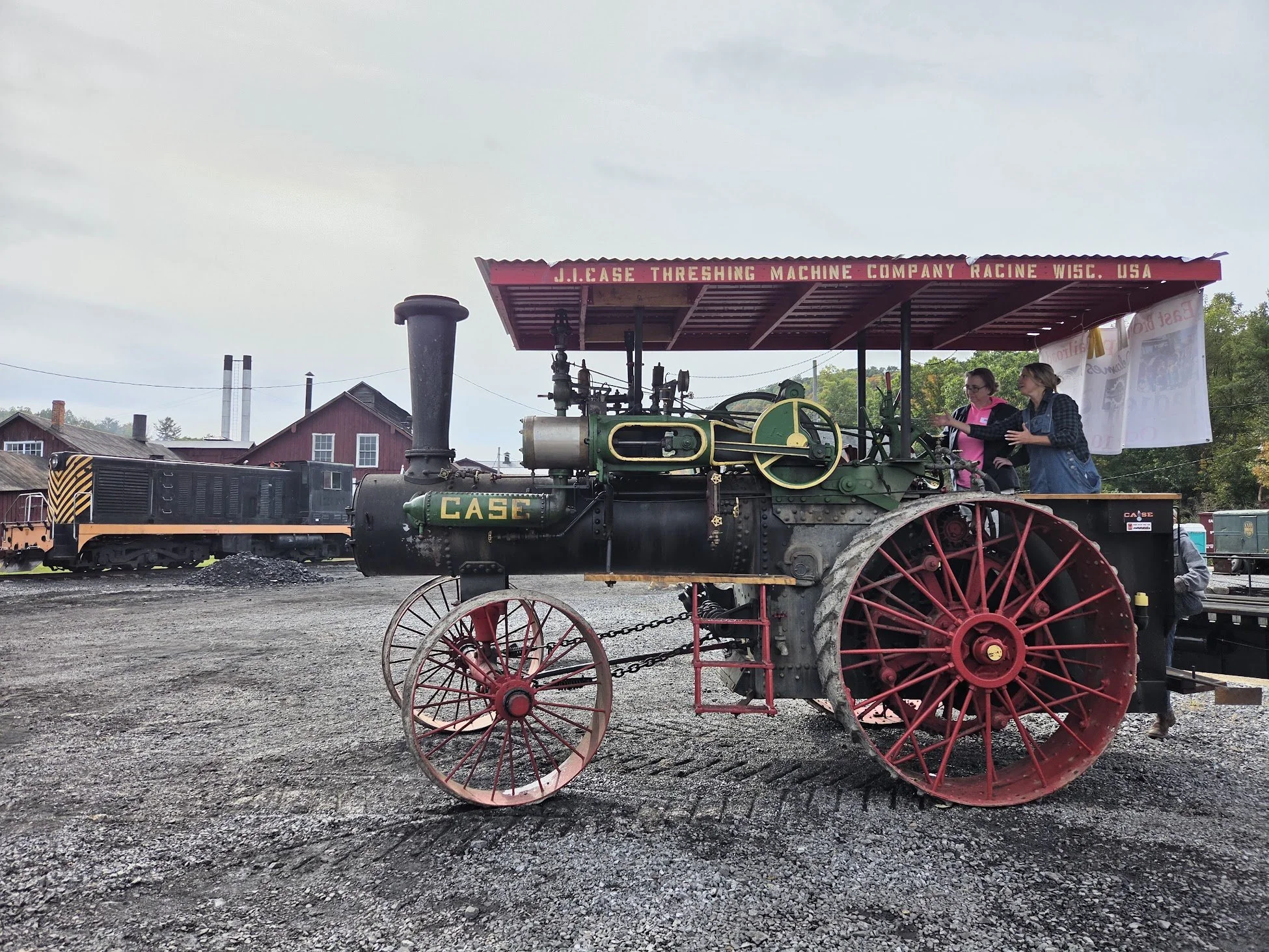
Nicole told me that witnessing those moments is part of what keeps her organizing these events. She has seen something as seemingly simple as pulling the throttle on an engine affect women deeply and, in some cases, change the trajectory of what they believed was possible for them.
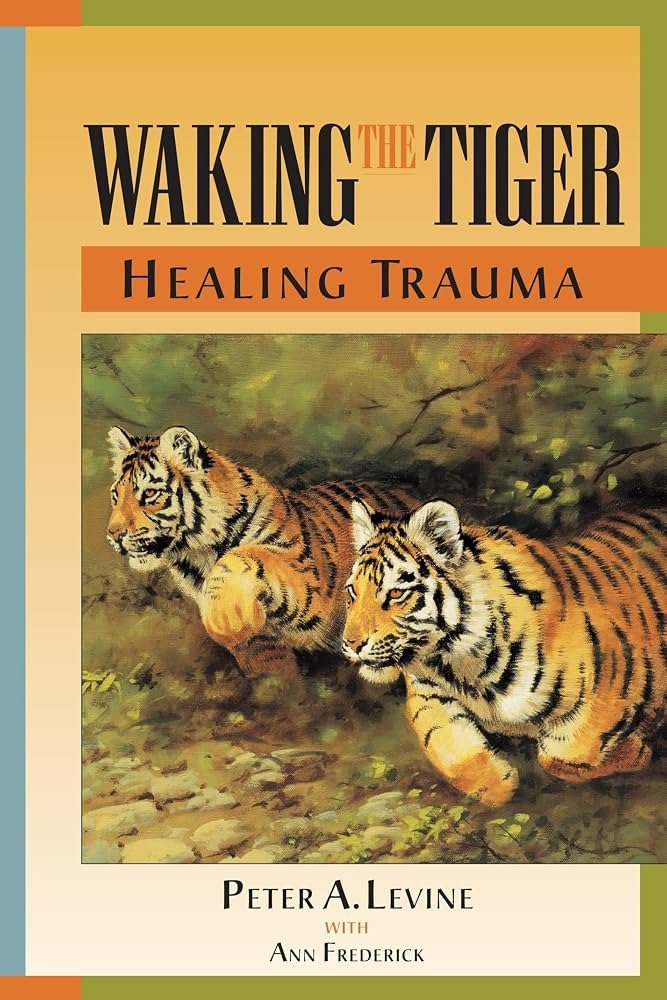
I have been thinking about that message ever since, particularly because I had just finished reading Peter Levine’s Waking the Tiger: Healing Trauma.
Although… admittedly… it took me an embarrassingly long time to realize that was actually the title. The friend who recommended the book to me and I both spent quite a while calling it Walking the Tiger.
When I finally noticed our mistake, I thought, Well, I guess you have to wake the tiger up before you can learn how to walk with it!
That still makes me laugh. But the more I sat with it, the more our accidental title began to feel like a surprisingly useful metaphor.
Waking the Tiger describes how our experiences live in more than our conscious thoughts. Sometimes something happens in the present and our bodies respond before we have fully figured out why: a racing heart, a tightening chest, the urge to leave, freeze, or suddenly make ourselves smaller.
We often call experiences that activate these old responses triggers — in some ways, the counterpart to the glimmers I wrote about in my previous post.
Our minds may know we are safely standing in the present while, at the same time, another part of us is responding to something it learned long ago. An integral part of waking the tiger is beginning to notice those responses with curiosity rather than judgment: Where did this come from? What is my body expecting to happen? What helped me before? And what is actually true now?
Nicole’s message made me wonder about the other side of that process: If experience can teach our bodies to anticipate danger, helplessness, or exclusion, what happens when another experience gives us new information?
Suddenly, I was thinking about that throttle again.
I had been fascinated by these enormous machines for years — maybe even decades — but fascination was not the same thing as feeling comfortable stepping forward to operate one. They are loud, intimidating, and potentially dangerous. I certainly did not have anything resembling expert knowledge of how they worked. And nearly every environment I had previously encountered where learning could have been possible was also one where I was talked over, made to feel foolish for asking questions, or generally made to feel unsafe in the vulnerability that comes with not already knowing.
Then, in this new environment, Nicole simply said:
Your turn.
You put your hand on the throttle, you move it, and this enormous machine responds.
The engine moves because you moved it.
There is something different about that kind of knowledge. Nobody is standing beside you merely saying, “You are capable.” Your body is participating in evidence that you are capable of more than you believed. Your hand moved. The machine answered. You did the thing you were not sure you could do.
I think this is why Nicole’s memories of those women affected me so strongly. The hands in the air, the uncontrollable smiles, the tears — those are not purely intellectual reactions to hearing an interesting lecture about empowerment. They are whole-person responses to an experience.
And I want to be careful here: I am not suggesting that operating a steam engine is therapy, nor that one meaningful experience can somehow resolve a trauma (or a lifetime of traumas) — though that would be a real time-saver. What I am increasingly interested in are experiences that allow us to encounter ourselves differently.
Someone who thought, I don’t belong here, discovers that perhaps they do. Someone who believed, I can’t do this, feels their own hands doing it.
Curiosity becomes participation, and participation begins to build confidence.
Maybe this is part of what walking the tiger can feel like: Not conquering it or pretending it was never frightening. Not demanding that an old response disappear simply because we intellectually understand where it came from. Instead, we gradually gather experiences that show us something else can also be true.
Nicole wrote something else that I loved. She described feeling almost a “moral obligation” to keep steam heritage alive by sharing it with as many people as possible, then laughed that this was apparently “another weird layer to my why.”
If you have been around this blog for a while, you probably know how much I love that.
Our whys are rarely neat. They develop through the things that fascinate us, the experiences that shape us, the communities we find, the people we meet, and those strange little moments when something inside us says, pay attention, this is important to me.
At Rewoven Life Coaching ✨, I spend a lot of time helping people explore those moments. Not only What do you want to accomplish?, but:
What experiences make you feel more like yourself?
When have you surprised yourself?
What might happen if you gave yourself more opportunities to experience that version of you?
Sometimes growth happens through insight or conversation. Sometimes it happens when we practice a boundary, enter the room we were afraid to enter, raise our hand, make the first attempt, or finally engage something we have only ever observed from a distance.
Sometimes our bodies need their own evidence.
That may be part of why Be the Community You Wish to See resonated with so many people. Ladies of Steam does not simply tell women that they belong in steam, it creates the kind of environment where they can experience themselves belonging there.
They hand them the throttle.
If Waking the Tiger is about recognizing what our minds and bodies learned from the experiences behind us, then maybe “walking the tiger” is what it can feel like when we begin carrying new experiences forward, too.
Little by little, we can collect evidence that something better can also be true.
Looking for support on your own journey?
You don't have to figure it all out alone. At Rewoven Life Coaching, I offer a compassionate, judgment-free space to explore where you are, where you want to be, and how to move forward in a way that feels authentic to you.
Book a free consultation to see if we're a good fit. I'd love to connect!
