Glimmers are Your Guide
Content note: This post discusses sexual violence, trauma, and survivor advocacy without graphic details. Please take care of yourself while reading.
I have been thinking a lot about glimmers lately.
Maybe it is because the news has felt particularly heavy. Recent coverage surrounding allegations of sexual violence at Cornell University has been difficult to absorb, especially for survivors and those of us who spend time working in sexual-violence prevention and advocacy.
RAINN recently reported that contacts to the National Sexual Assault Hotline rose 73% over the course of a week, with many people specifically saying that coverage of the Cornell case prompted them to reach out. That number is shocking.
I have spent years learning about sexual violence: its prevalence, its effects, the systems surrounding it, and the barriers survivors encounter when they seek safety, support, and justice.
I will admit that knowing so much can sometimes make cynicism all too easy. And still, I keep encountering glimmers.
I first came across that language through famed stuntwoman Kimberly Shannon Murphy's memoir, Glimmer: A Story of Survival, Hope, and Healing. Murphy writes about surviving childhood sexual abuse and building a life that became so much larger than what happened to her. Her memoir does not pretend healing means erasing the past. It makes room for both pain and possibility to exist in the same story.
The term glimmer itself comes from the work of clinical social worker Deb Dana, who uses it to describe those small moments in which we notice safety, connection, or wellbeing.
A glimmer might be something like the following: Sunlight hitting the water just right. Your dog settling beside you. Someone remembering something you told them weeks ago. A song you forgot you loved. The moment your shoulders drop because, for just a second, your body realizes that right here, right now, you are okay.
But lately I have been thinking about another kind of glimmer.
Sometimes, a glimmer is another human being choosing to do something about the darkness.
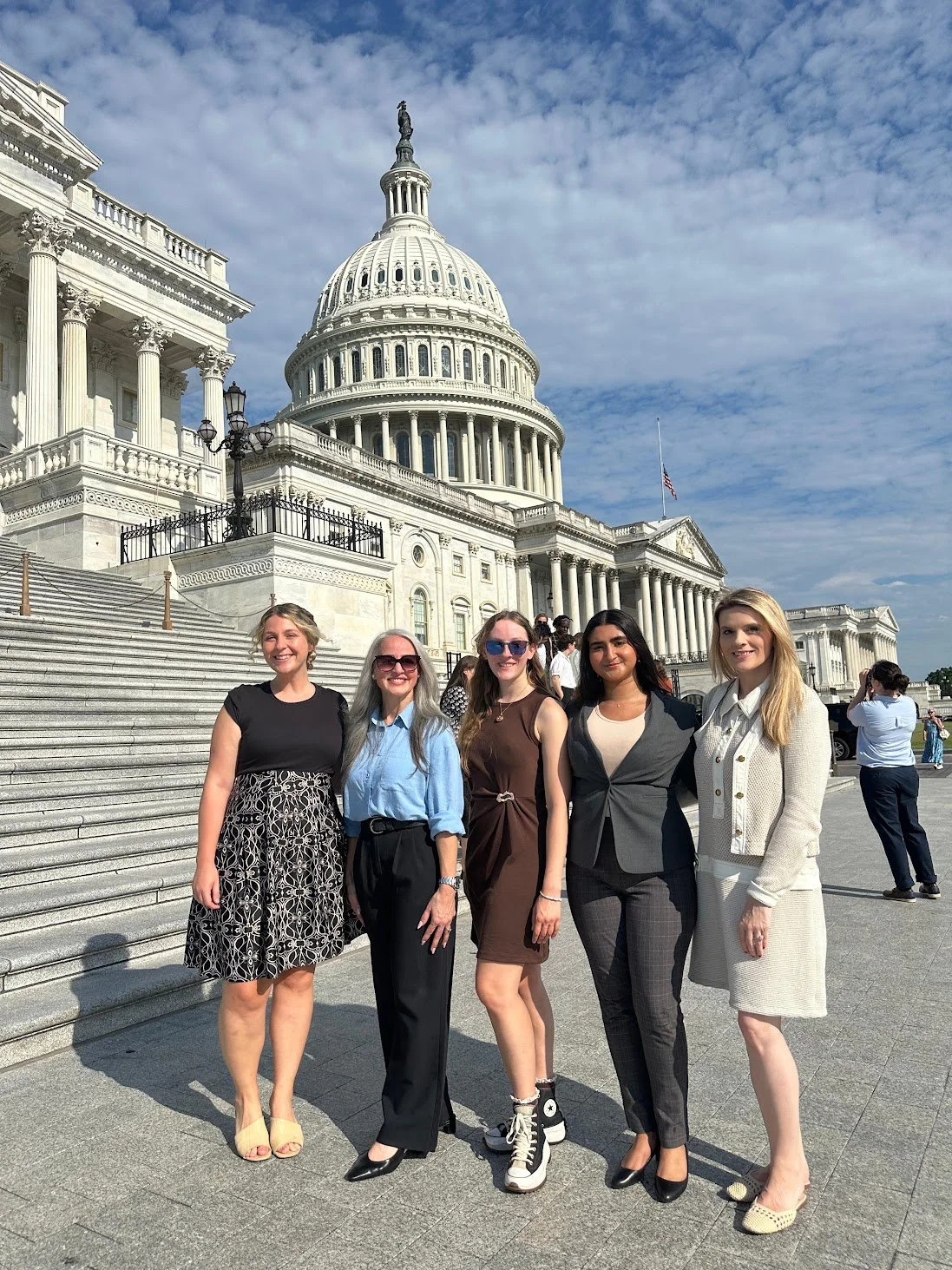
My fellow survivor-advocates and I during our September Drop-In Congressional Day of Action.
This September, I had the privilege of participating in another RAINN Congressional Day of Action.
Throughout the day, I was surrounded by people who know an extraordinary amount about sexual violence and still choose to believe change is worth working toward.
RAINN staff. Advocates. Hotline volunteers, many of them survivors themselves. People sharing their own stories, meeting with lawmakers, explaining research, answering questions, pushing for better policy, and reminding decision-makers that every statistic represents an actual human life.
There is something incredibly grounding about being in a room like that. Because advocacy does not magically make you unaware of how enormous the problem is. If anything, it can make you more aware.
You learn where systems fail. You see how slowly policy moves. You understand that meaningful change often takes years of conversations, organizing, research, testimony, voting, writing, calling, educating, and showing up again.
There are days when that knowledge feels heavy. And then, someone beside you makes you laugh. Someone notices that you are overwhelmed and checks in on you. A survivor finishes telling an incredibly difficult story and another person quietly reaches for their hand. A warm hug is given after a meeting. A hotline volunteer talks about answering the phone because they want the person on the other end to encounter compassion at a moment when they may desperately need it.
Those moments matter just as much, if not even more so than, the moments of trial on this advocacy journey.
These moments are the glimmers ✨.
Social work has given me language for something I think many of us intuitively understand: people do not exist separately from their environments.
Our communities can harm us, and they can also hold us.
And sometimes healing means creating environments where safety, dignity, curiosity, and connection become a little more possible.
I actually found myself thinking about this after writing last week's post about Ladies of Steam.
The circumstances could hardly be more different, but there is a thread connecting these experiences for me: when people encounter a world that does not reflect their values, they can decide to participate in creating something different.
A safer room.
A more welcoming community.
A better policy.
A seat at a table…or an entirely new table.
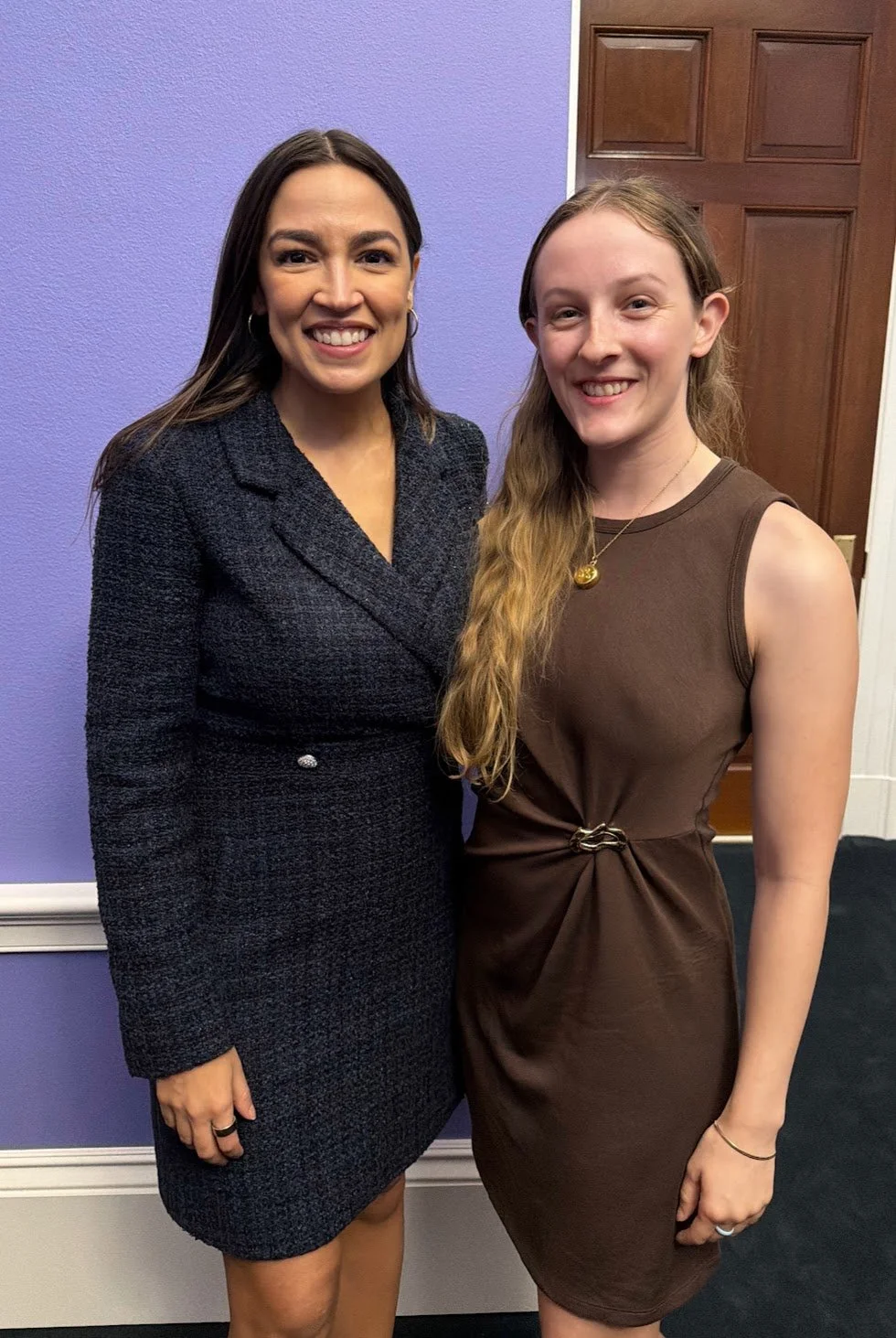
Myself and Rep. Alexandria Ocasio-Cortez after discussing our shared experiences, how we use our voices to reclaim our power from those who tried to take it from us, and how important taking that next right step can attract others efforting to do the same.
This is something I think about in my work at Rewoven Life Coaching ✨, too. We often cannot control the whole environment around us. We certainly cannot repair every broken system by ourselves.
But we can get curious about what matters deeply to us, where we have agency, and what the next right step might look like.
Sometimes that step changes our own life. Sometimes, without realizing it yet, we are planting something that another person will eventually need.
I want to be careful not to turn this into a lesson about finding silver linings.
There are experiences that simply hurt.
Nobody owes the world gratitude for their trauma. Nobody needs to make something beautiful out of suffering to prove they have healed correctly.
Hope does not require us to deny the darkness.
Sometimes hope is simply noticing that darkness is not the only thing present.
Knowing what I know about sexual violence sometimes makes me cynical. Knowing the people I know because of this work makes me hopeful. Both are true.
So when the world feels impossibly heavy, you do not have to carry all of it.
Notice what reminds you that goodness still exists, and let yourself receive it. And, when you have the capacity, perhaps offer a little of it back.
Look for the glimmers.
And, when your capacity allows, become one.
With enough glimmers, we can make the world a lighter place.

A recent glimmer ✨.
Looking for support on your own journey?
You don't have to figure it all out alone. At Rewoven Life Coaching, I offer a compassionate, judgment-free space to explore where you are, where you want to be, and how to move forward in a way that feels authentic to you.
Book a free consultation to see if we're a good fit. I'd love to connect!
If you or someone you know has experienced sexual violence, confidential support is available 24/7 through RAINN's National Sexual Assault Hotline. Call 800-656-HOPE (4673), text HOPE to 64673, or connect through RAINN's online hotline.
