On authenticity, power, and the relationships that change when you do.
Some people will like you less when you stop being easy to override. That is a difficult part of healing to talk about because we tend to frame empowerment as though it comes with an uncomplicated reward: you find your voice, establish your boundaries, become more confident, and then everyone who loves you applauds the new version of you.
Sometimes they do.
Sometimes they absolutely do not.
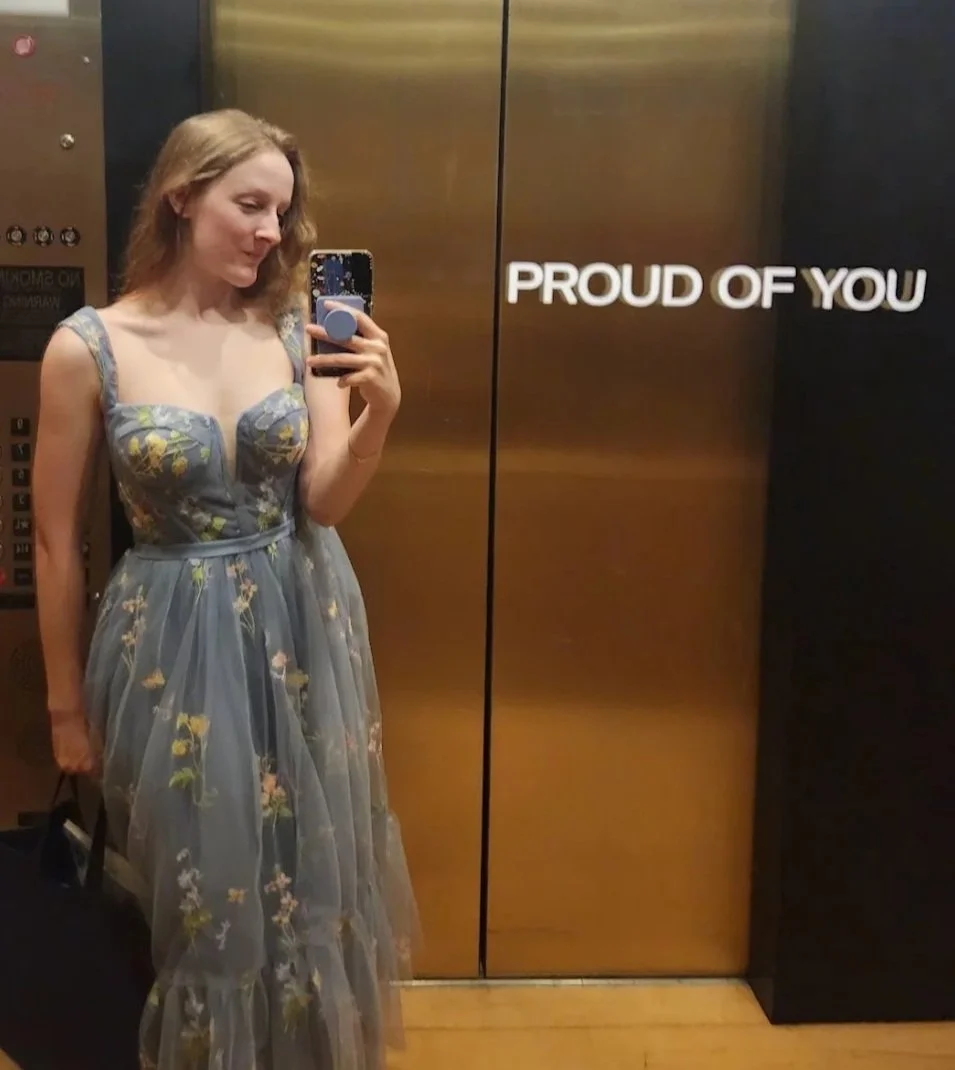
Before healing, seeing this affirmation in my hotel’s elevator would have triggered me. What do you mean you’re proud of me? You don’t even know me! …to inanimate text in an elevator. Continuously grateful to be in a place now where I am receptive to messages of positivity and healing! Interested in getting there yourself? Apply for your FREE consultation today!
For people who have survived controlling, abusive, or chronically invalidating relationships, authenticity can become part of taking their power back. You begin noticing what you actually think before checking whether it will upset someone. You discover preferences you previously dismissed. You say no without constructing a legal brief explaining why. You stop automatically smiling through comments that hurt you simply because keeping the room comfortable once felt safer than acknowledging your own discomfort.
These changes can feel beautiful. They can also change your relationships.
Across many forms of abuse, power and control are central dynamics. When someone has benefited from your silence, compliance, self-doubt, or constant willingness to accommodate them, a more self-trusting version of you may be considerably less convenient. The strategies that once worked to diminish you may stop producing the same result.
But I think there is another, less obvious group worth talking about too.
Not everyone who struggles with your growing authenticity is abusive. Sometimes another person's self-possession makes us uncomfortable because it touches something unresolved in us. I know this because authenticity used to make me uncomfortable.
Before I had done much of my own healing, there were people whose openness, confidence, or willingness to be unmistakably themselves felt almost embarrassing to witness. In retrospect, I don't think there was anything wrong with them. I think they were doing something I didn't yet feel free enough to do myself.
That distinction matters — we do not need to diagnose everyone who reacts poorly to our growth…but we can observe.
We can notice who becomes colder when we establish a boundary. Who seems to enjoy our kindness until it includes kindness toward ourselves. Who celebrates our confidence until we disagree with them. Who preferred our gentleness when they mistook it for permission.
And we can also notice the people who make room.
The people who do not require us to become smaller so they can remain comfortable. The ones who can hear a boundary without interpreting it as betrayal. The ones who seem genuinely pleased when we become more joyful, expressive, opinionated, curious, ambitious, peaceful, or simply more ourselves.
This feels particularly relevant as the holidays approach. Returning to family systems, hometowns, traditions, or long-established relationships can have a strange way of inviting old versions of ourselves back into the room. You may have spent an entire year practicing boundaries and self-trust only to find yourself at a dinner table where someone still expects you to laugh off the same inconsiderate comment you have been swallowing since you were sixteen.
Growth does not always mean that moment stops feeling uncomfortable. Sometimes it means you recognize what is happening sooner and have more choices about what you do next. You pause, connect to your Authentic Self, and move forward in deciding what to do next rather than just falling into an old pattern of shrinking for the sake of perceived safety.
Authenticity is also not an obligation to confront every unsafe person. For survivors especially, safety comes first. There may be circumstances where protecting yourself means withholding information, disengaging, leaving quietly, or choosing not to challenge someone directly. That is not a failure of empowerment. Being authentic does not require giving every person unrestricted access to you. Discernment is an essential co-pilot with authenticity. One of my favorite quotes is as follows,
“If passion drives you, let reason hold the reins.” - Benjamin Franklin
To me, authenticity has increasingly come to mean something quieter: refusing to abandon myself simply to preserve someone else's preferred version of me.
That is where boundaries become important, although I can talk boundary strategies until the cows come home and still miss the deeper point if we do not address what sits underneath them. A boundary is much easier to maintain when you genuinely believe that your needs, values, preferences, and perspective are allowed to exist.
This is one place where coaching can be especially meaningful after someone has already done some deeper healing work. Coaching is not trauma treatment, but it can provide a space to practice translating insight into daily life: deciding what you want, experimenting with new boundaries, taking values-aligned action, and learning what it feels like to trust your own judgment again.
And yes, you may lose something in that process.
You may lose approval. You may lose invitations. You may lose relationships that depended on an arrangement you no longer agree to participate in. You may even lose an identity you built around being endlessly easygoing, helpful, agreeable, or pleasant.
Grief can coexist with growth.
But you may also gain the extraordinary relief of no longer spending so much of your life negotiating against yourself.
The people who belong in the life you are building do not need you to disappear in order to stay. Bcoming more yourself is never a mistake.
Looking for support on your own journey?
You don't have to figure it all out alone. At Rewoven Life Coaching, I offer a compassionate, judgment-free space to explore where you are, where you want to be, and how to move forward in a way that feels authentic to you.
Book a free consultation to see if we're a good fit. I'd love to connect!
