On Healing through Community
April is Sexual Assault Awareness and Prevention Month, a time devoted to honoring survivors, preventing harm, and renewing our collective commitment to a world free from sexual violence.
For the past three years, I have volunteered with RAINN, first as a member of the Speakers Bureau and, more recently, through their annual Congressional Day of Action in Washington, D.C. Each April, survivors, advocates, hotline volunteers, and allies come together on Capitol Hill to support legislation that helps prevent sexual violence, protect children and survivors, and strengthen systems of accountability.
The article about this year’s Congressional Day of Action can be found here: https://19thnews.org/2026/04/congress-sexual-misconduct-survivors-advocacy/.
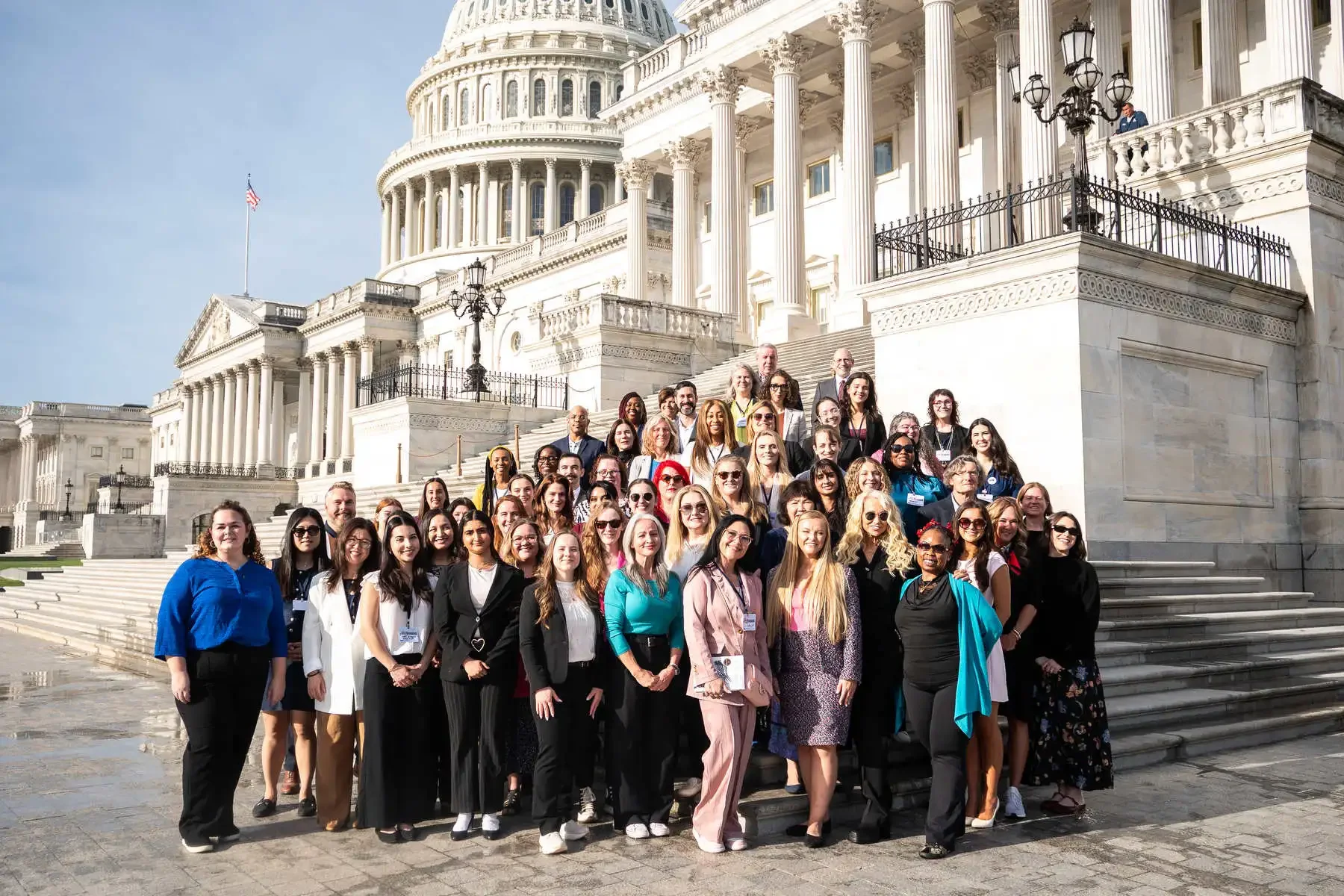
The participants of the 2026 Congressional Day of Action.
What I always carry home from these advocacy days — alongside the very real emotional exhaustion of discussing heavy topics in back-to-back meetings in the most influential halls of our nation! — is a profound reminder of the healing power of community.
This year, that reminder began the night before our meetings on the Hill at RAINN’s first Evening with RAINN. Advocates traveled in from all around the United States, many of us meeting one another for the first time. We had the chance to connect with fellow survivors, allies, RAINN staff, and volunteers from the National Sexual Assault Hotline, many of whom are survivors themselves.
We also received “swag bags” filled with informational materials to bring back and distribute in our own communities, and we listened to a thoughtful panel discussion with Tay Lautner, Brooke Nevils, RAINN’s Director of Communications, RAINN’s Director of the Hotline, and an experienced federal sex crimes investigator. The conversation was honest, insightful, and deeply human. It set the tone for the day ahead: survivor-centered, action-oriented, and rooted in the belief that change happens when people refuse to lower their voices about what matters.
There is something magnificent about moving through Capitol Hill with people who have transformed pain into purpose. People who use their voices, stories, platforms, professional roles, and lived experiences to create change. People who understand, without needing much explanation, what it costs to keep showing up.
This year, that sense of community felt especially powerful. Advocating alongside RAINN staff, survivor leaders, hotline volunteers, mental health advocates like Taylor Lautner, and author-activists like Brooke Nevils was a reminder that healing and advocacy often live side by side. Through the CDA, RAINN provides us all with a large platform to use in service of survivor safety, policy change, and public accountability.
Throughout the day, the people of Congressional Day of Action feel like a microcosm of what I hope to cultivate through Rewoven Life Coaching: a space where people are strong in their gentleness, passionately kind, and fiercely hopeful. If someone feels overwhelmed, there is quite literally a team of people ready to support them — to help them pause, breathe, reorient, and return to the work with as much steadiness as possible.
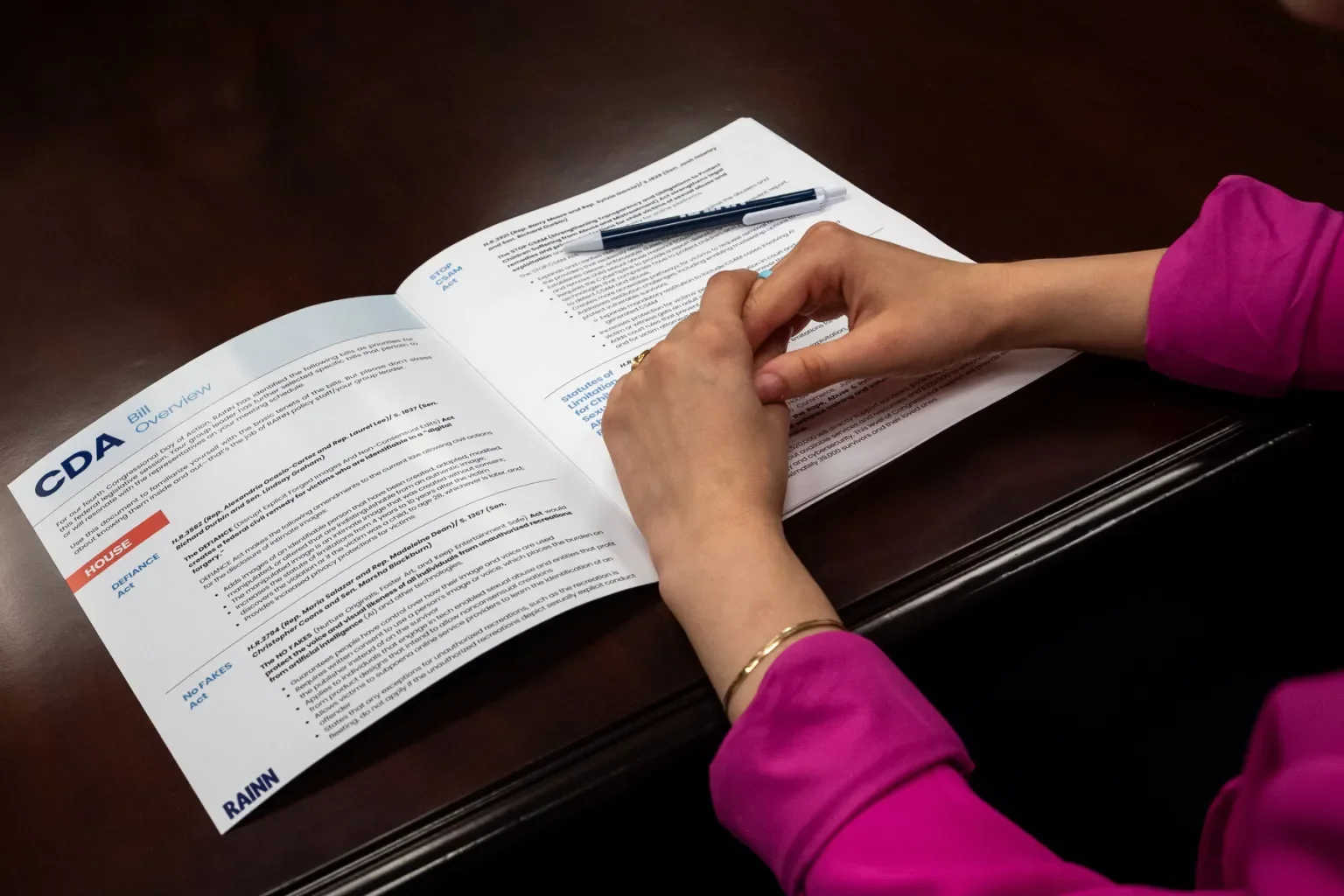
An image from one of my meetings with a Senator.
And while that level of care can feel extraordinary, I do not believe it is out of reach. Often, when we look closely enough, there are people in our lives and communities who are already rooting for our healing, our steadiness, and our success. They may be friends, advocates, mentors, teachers, coaches, organizers, therapists, family members, or chosen family. These relationships — built with care, consent, boundaries, and compassion — are part of what make safe people, safe communities, safe policies, and safer futures possible.
We also had the opportunity to attend a press conference for the GUARD Act, legislation focused on protecting children from harmful AI chatbot interactions. Seeing survivor advocates, lawmakers, and policy leaders gather around an issue with such urgency was a reminder that advocacy really can move the needle — slowly, imperfectly, but meaningfully.
Healing community does not exist only in formal spaces. It can look like a day on Capitol Hill, but it can also look like dancing with friends, surfing with family, attending a survivor-centered yoga class, joining group therapy, or spending an afternoon in a creative studio. It can be found in advocacy organizations, art museums, movement spaces, classrooms, book clubs, and quiet conversations with people who help you feel less alone.
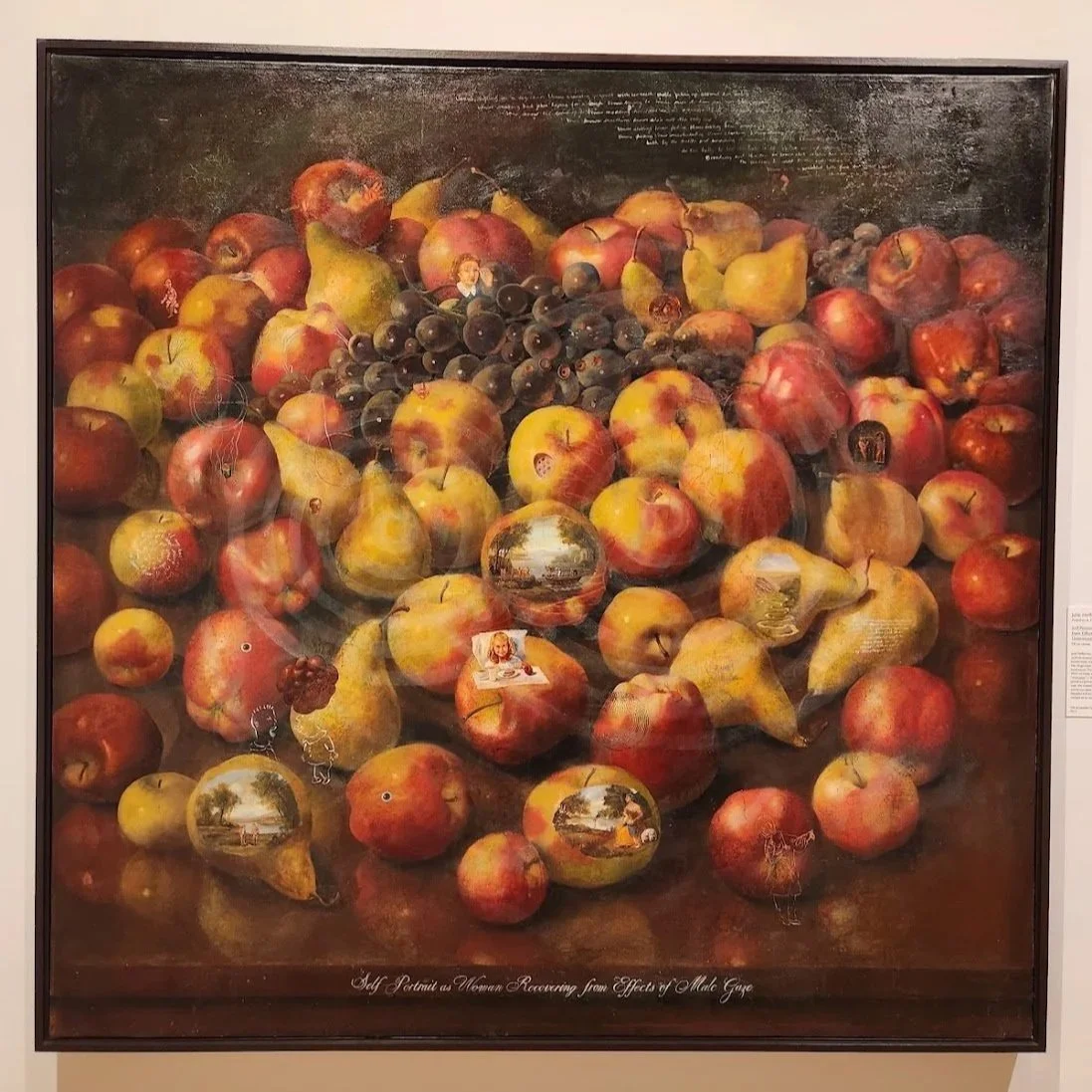
Self Portrait as Woman Recovering from Effects of Male Gaze (What’s Underneath), 1992. Julie Heffernan. Palmer Museum of Art. Image taken following a free community creative event.
For readers in Centre County, healing community may be found through Centre Safe, through the creative and mindfulness programs offered at the Palmer Museum of Art, or through local spaces that bring movement, art, advocacy, and care together, such as Boalsburg Yoga & Wellness. If you are searching for something supportive nearby in other communities, try using keywords like “[your county] survivor support,” “trauma-informed yoga [your town],” “creative wellness near me,” “support groups near me,” or “survivor-centered healing.” You might also ask trusted people in healing spaces where they have found intersectional healing opportunities — spaces that recognize we do not heal as only one part of ourselves, but as whole people shaped by identity, community, access, culture, trauma, and lived experience.
The form matters less than the experience of being met.
So much of pain convinces us that we are isolated in it. That no one else could understand. That our grief, fear, anger, or tenderness must be carried privately. But again and again, community interrupts that loneliness. It reminds us that other people are also trying to be human in this beautifully complex world; carrying their own grief, searching for their own steadiness, and still choosing connection.
That shared humanity can transform what feels solitary into something softer. Not because community erases pain, but because it helps us hold it differently.
Moving forward with grief — and I believe we all carry grief from something — can feel endlessly challenging. But allowing others to share in the weight of it can turn survival into belonging. It can turn isolation into witness. It can turn individual healing into collective care.
So, dear weaver, I invite you to keep an eye out for the places where community is waiting for you.
And when you cannot find one, consider what it might mean to create one.
Your healing does not have to happen alone.
Your story does not have to live in silence.
And your presence in community is more powerful than you know.
